
|
Liquid Crystal Display also called as LCD is very helpful in providing user interface as well as for debugging purpose. The most common type of LCD controller is HITACHI 44780 which provides a simple interface between the controller & an LCD. These LCD's are very simple to interface with the controller as well as are cost effective. |
|||||||||||||||||||||||||||||||||||||||||||||||||||||||||||
|
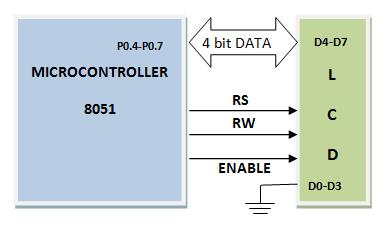
The LCD requires 3 control lines (RS, R/W & EN) & 8 (or 4) data lines. The number on data lines depends on the mode of operation. If operated in 8-bit mode then 8 data lines plus 3 control lines i.e. total 11 lines are required. |
|||||||||||||||||||||||||||||||||||||||||||||||||||||||||||
|
In case of 4-bit mode only 4 data lines are required & the 8-bit data is sent by first sending the higher nibble followed by the lower nibble. Since we are operating the LCD in 4 bit mode only 7 port pins are required. Here is a program for interfacing a LCD through 8051 in 4 bit mode. The Higher 4 bits of P0 are connected to the higher 4 bits of the LCD i.e. P0.4 – P0.7 are connected to D4 – D7.
|
|||||||||||||||||||||||||||||||||||||||||||||||||||||||||||
 |
|||||||||||||||||||||||||||||||||||||||||||||||||||||||||||
|
The three control lines are RS, RW & Enable. |
|||||||||||||||||||||||||||||||||||||||||||||||||||||||||||
|
RS: Register Select. When RS = 0 the command register is selected. When RS=1 the data register is selected. |
|||||||||||||||||||||||||||||||||||||||||||||||||||||||||||
|
RW: Read or Write. When RW=0 write to LCD. When RW=1 read from LCD. |
|||||||||||||||||||||||||||||||||||||||||||||||||||||||||||
|
Enable: Used to Latch data into the LCD. A HIGH TO LOW edge latches the data into the LCD. |
|||||||||||||||||||||||||||||||||||||||||||||||||||||||||||
|
|||||||||||||||||||||||||||||||||||||||||||||||||||||||||||
|
.