What is Pulse Oximeter?
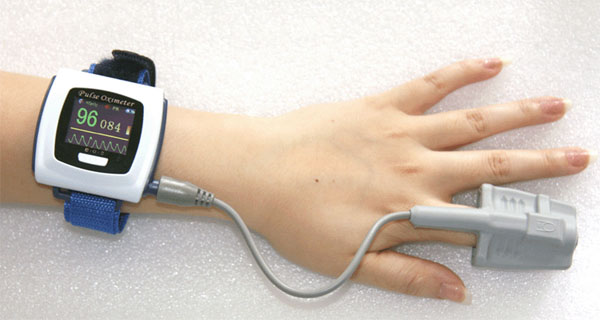
Pulse Oximeters are low cost non-Invasive medical sensors used to continuously measure the Oxygen saturation (SPO2) of haemoglobin in blood. It displays the percentage of blood that is loaded with oxygen.
Principle of Pulse oximeter
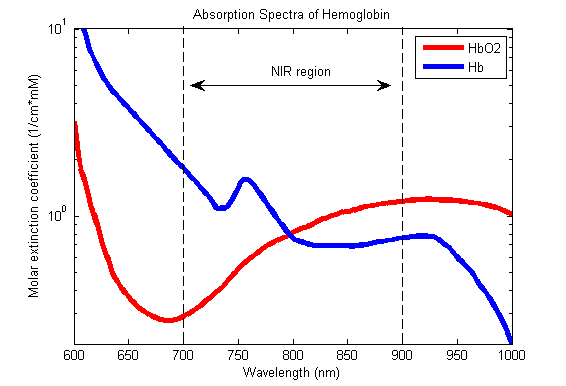
The principle of pulse oximetry is based on the differential absorption characteristics of oxygenated and the de-oxygenated hemoglobin. Oxygenated hemoglobin absorbs more infrared light and allows more red light to pass through. Whereas Deoxygenated hemoglobin absorbs more red light and allowing more infrared light to pass through.
What’s inside the Sensor?
Each pulse oximeter sensor probe contains two light emitting diode one emitting red light and the other emitting near infrared light, it also has a photo-detector. The photo-detector measures the intensity of transmitted light at each wavelength. And using the differences in the reading the blood oxygen content is calculated. The probe is placed on a suitable part of the body, usually a fingertip or ear lobe.
Methods for Monitoring Oxygen Saturation in Blood
Two different methods are used for transmitting light through the transmitting medium.
- Transmission Method
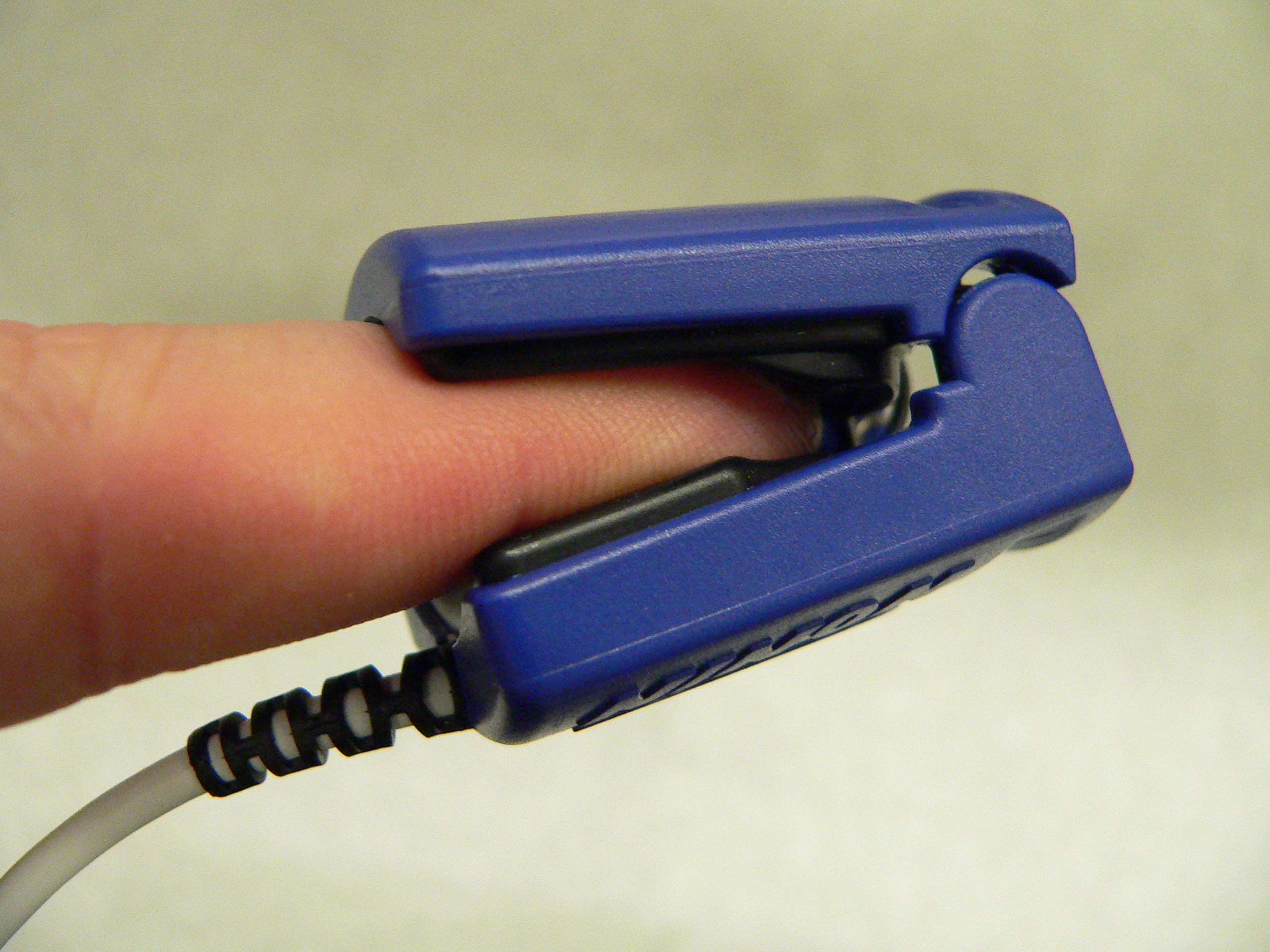
In the transmission method the transmitter i.e. the LED & the receiver i.e. the photo-detector are placed on opposite side of the finger. In this method this finger will be placed between the LED’s & the photo-detector. When the finger is placed a part of the light will be absorbed by the finger and some part will reach the photo detector. Now with each heart beat there will be increase in volume of blood flow this will result in more light getting absorbed by the finger so less light reaches the photo-detector.
Hence if we see the waveform of received light signal it will consist of peaks in between heart beats and trough (bottom) at each heartbeat. This difference between the trough & the peak value is the reflection value due to blood flow at heart beat.
- Reflectance Method
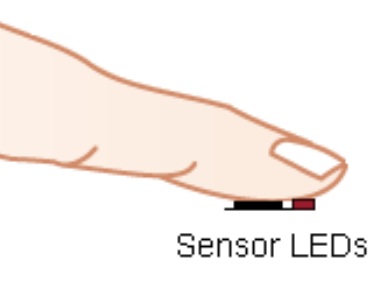 In Reflective method the LED & the photo-detector are placed on the same side i.e. next to each other.In the reflective method there will be some fixed light reflection back to the sensor due to finger. With each heart-beat there will be an increase in blood volume in the finger this will result in more light reflection back to the sensor.
Hence if we see the waveform of the received light signal it will consist of peaks at each heartbeat. A fixed low value reading is there in between the heart beats this value can be considered as constant reflection and this difference of the peak subtracted from the constant reflection value is the reflection value due to blood flow at heart beat.
In both above cases you can see the troughs/peaks in reflected light occur at each heartbeat the duration between two spikes can be used to measure the persons Heart Rate. Hence a typical heart beat sensor Module consists of only on Transmitter LED (mostly infrared) and one photo-detector.
So exactly how is Oxygen Saturation Calculated?
Now that you have come to know the different methods of sensor placement while measuring the oxygen content in blood (SPO2) we will now see how exactly it works. As said earlier the sensor consist of two transmitting LED’s a Red led of approximately 650 nm (nano-meter) and an infra red led which has a wavelength of 950 nm.